

Marketing is a tough job these days. There are a zillion moving parts, give or take a few. What was most often defined as an orderly march down a funnel-shaped thing, is more often beset by a range of shiny objects, power grabs, fear, budget shifts, important fires to extinguish and other various threats to goals and timelines that pop up daily. Think of a brave caveman trying to lure in a wooly mammoth all by himself. Impossible! There are so many environmental elements to consider. Just like a marketer trying to convert a prospect to a purchase to a repeat purchaser, the strategies are always evolving.
Today, I want to talk about one specific piece of marketing…(pause for effect)… analytics! I cannot express enough the importance of quality marketing analytics. I’m not talking about Excel spreadsheets and PowerPoint bar charts. I’m talking about the process and technologies that enable marketers to evaluate the success of their marketing initiatives by measuring performance using important metrics such as ROI, marketing attribution and overall effectiveness. Yet according to the 2016 State of Marketing report by Salesforce Research, only 31% of marketing survey-takers are extensively using marketing analytic technology to inform their marketing decisions. We know analytics for marketing is vital to the success of marketing, sales, and the entire organization, but too many marketing teams aren’t measuring what they can or should.
As I’ve stated in another post, Carpe That Marketing Data, not all marketing teams are created equal. On top of that, there is a large scale of maturity when it comes to analytics, from basic reporting to sophisticated approaches like predictive analytics. The good news is, unlike the Homo sapiens before us, there’s no need to reinvent the wheel. Let me explain.
No matter where your team is at on the maturity (and evolving) scale of marketing analytics, the process of getting to the next step is the same. I have my theory down to five basic steps.
- Figure out your objective
- Determine a data model
- Get your data
- Create actionable reporting
- Apply learning and validate
1. Figure out your objective
This process requires you to start with the end goal in mind. Ask the basic questions: What do you really want to know? What questions you are trying to answer? Move your efforts past the easy stuff. Think deeper! This time around, define an objective that sounds like:
As a/an __________________________I want to see ___________________so that __________________.
Try this simple exercise with yourself in order to obtain a basic objective or need you currently have. An exercise such as this probably took you less than three minutes and will save you from spinning your reporting wheels for months.
2. Determine a data model
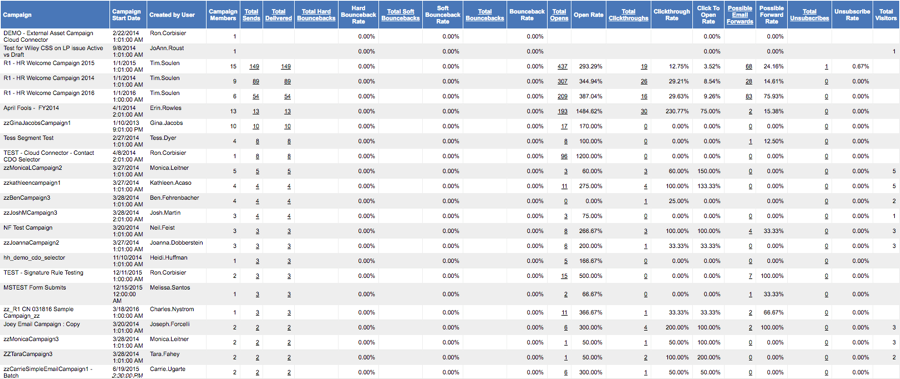
Preface: This is not necessarily a scary process that involves predictive modeling or advanced calculus. A model consists of columns in a spreadsheet and the calculation used to give you results or metrics. This is the perfect time to understand what data you have to work with and to possibly bring in an experienced analyst to assist with questions. You may have more to work with than you initially thought, so it’s best to lay it all out. See the example below as a basic example of a data model.
3. Get your data
Based on your objective, figure out what data you need to access in order to answer your initial questions. I know, easier said then done. But, you need access to tangible data in order to run your model, which could potentially raise more questions. What does accessing data mean? Where do I store my data? Who gets access? In what tool am I doing my analysis?
Deep breath, my friend! There are people out there who specialize in the “Get your data” step, and I suggest you tap into their knowledge. Relationship One has a fine team of analysts (I’ll brag, since I’m one of them) who have built out a seamless process to get you access to the data that is important to you. So, no fear! The Relationship One Analytics team is here!
4. Create actionable reporting
To avoid what is known in my world as ‘analysis paralysis’, choose the top metrics that matter the most. Focus and prioritize your work around those metrics. Maybe you want to reduce the costs of your campaigns. Go back to your data model. What numbers can you affect to help reduce this cost? Create reporting that forces you to make an informed decision and take action. That’s the goal.
5. Apply learning and validate
This is another basic concept that will lead you to greatness. One of the best things about digital marketing is that we can see the results of our changes almost as they happen. But, not so fast! You may want to make changes immediately, but give it time and see where the needle moves after a week or two. Benchmark month after month and keep an eye on trends. There is always more than meets the eye when it comes to data, so understanding your improvements is the key to success.
Whether you are just starting your marketing analytics journey or you are looking to take your current setup to the next level, these five steps will set you up for success. Give your work more purpose with a little bit of science. Now, go! Your data awaits analysis.
Share This
About the Author: Relationship One