

 A few weeks back, I attended the Integrated Marketing Summit in Minneapolis for a few days of workshops, networking, and lots of learning. Local marketing and advertising professionals came together to hear from industry experts to learn how to take their marketing to next level.
During the conference, a panelist discussion about integrated marketing strategies presented a term that I had seen in industry content but that I didn’t fully understand. Given the number of session attendees, who, like me were feverishly writing notes and taking photos of the slides in between sips of coffee, I came to the realization that I was not alone. Do you know what “Integrated Marketing” means? Do you know how it applies to you or your industry? You may be practicing it and not even realize it! Or, perhaps you’ll learn what it is by reading this article, and it will revolutionize your marketing plans. Let’s find out.
First, let’s start with a definition. Gleanster defines integrated marketing as:
“The application of consistent brand messaging across both traditional and nontraditional marketing channels and using different promotional methods to reinforce each other.”
Marketers are increasingly understanding the need to reach their audience via a variety of channels to not only extend reach and increase frequency but also to make it easy for the consumer to engage. Another implication I gather is that communicating a consistent and cohesive brand message across a multitude of marketing channels strengthens a brand’s image and promotes their message more effectively. Whether you work in the B2C or B2B field this is relevant, and either can take inspiration from each other.
Let’s take a look at an example that showcases the concept simply but clearly.
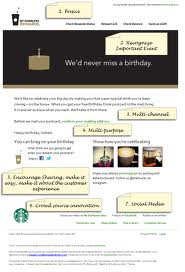
The common consumer deciphers this email as a birthday message from Starbucks as a perk of being a rewards member. This is only one email yet, within it, there are six marketing channels included: email, web, crowd-sourcing, mobile, social media, and good ol’ direct mail. In one email message, multiple channels are seamlessly integrated to:
- Give reward members a personalized experience (read up on marketing personalization)
- Help Starbucks’ marketing team append and cleanse their customer data
- Encourage customers to stay connected and to share their love via social media
- Push traffic to the Starbucks website
See what they did there? Or were you distracted with the offer of a free grande triple chocolate mocha frappe? Starbucks integrated their marketing tactics in one simple tactic. Read more about Starbucks’ campaign effectiveness.
Are other companies practicing integrated marketing? How do you compare? Let me tell you. According to a survey by Gleanster, 38% of B2B companies use one channel for marketing communications, whereas about 11% use five or more channels. That’s a lot of underutilized opportunity! When the same study asked respondents to designate their top three channels for integrated marketing, the B2B companies responded with:
- Mail (Both Email and Direct)
- Social Media
- Blogs
Now don’t go eliminating your other channel tactics. Not on the list, but still important, is print, online ads, paid search, trade shows, and webinars. Keeping every channel in mind becomes crucial when looking at the buyer process. Eloqua and Jess3 collaborated on The Content Grid which helps marketers plan for which channels should be used for what purpose in the purchase cycle.
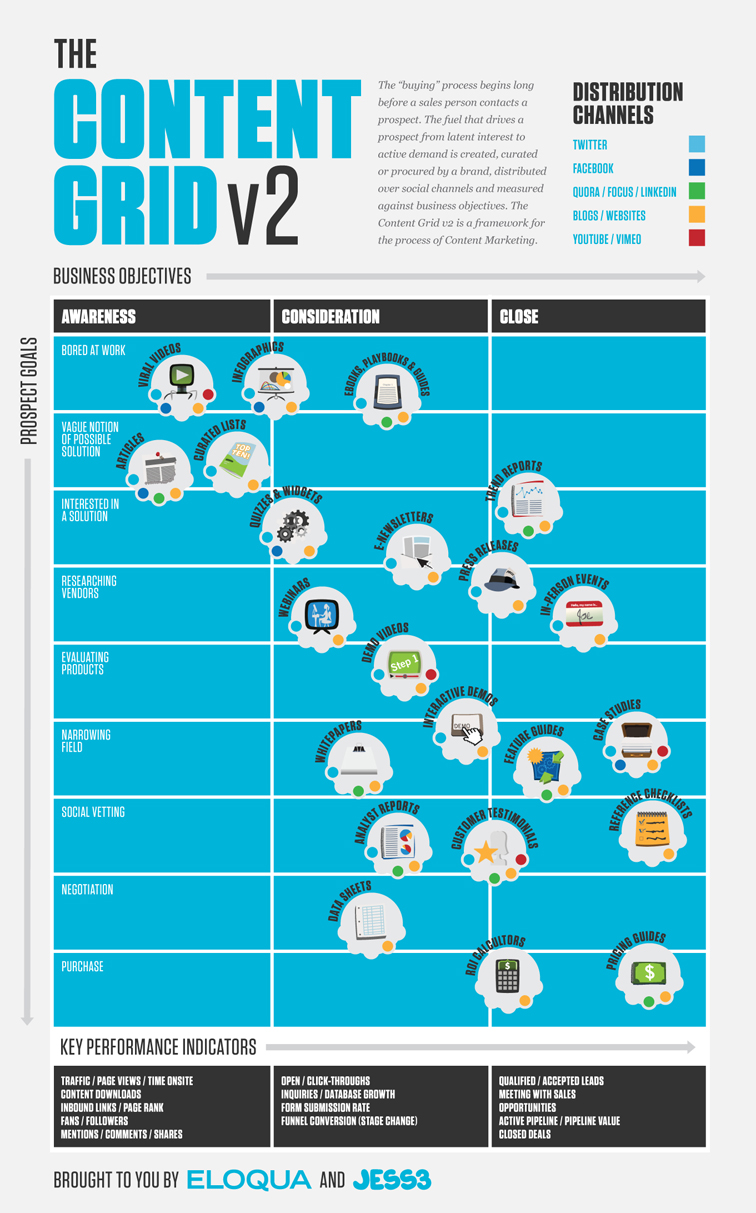
You’ll notice a few of the popular channels I listed above appear in the beginning of the buyer’s journey. Perhaps the opportunities many B2B companies are missing are due to the lack of content in the other stages. They’re not alone. Per Bloomberg:
“It’s not easy to integrate a brand into a wide suite of processes, materials, and messages that have been shepherded by different people, driven by different objectives, and brought to life in different places within the organization.”
That said, don’t fall victim to the 38% using one channel! The easy way to start integrating your marketing is to create content that can be curated and used with continuity across multiple channels. Have each of your teams work together to assemble content that supports each other — content that has the same message but fits into the designated channel style. From here, see what has been working best for your brand and continue to develop ways to hit multiple channels in one campaign, just as Starbucks did.
Integrated marketing is ever-evolving, requires strong cross-functional collaboration, and is ultimately about the consumer. Technology continues to make it easier to practice integrated marketing, but it still requires strategy to be executed well. My advice: get yourself and your team some pumpkin spiced lattes to encourage strategic planning for integrating your marketing campaigns.
Share This
About the Author: Relationship One