
 Yes, I’m guilty. I’m one of “those” people that purchased a bottle of Diet Coke because it had my name on it. That’s right. I spent good money on something I rarely drink simply because it had my name on it. And yes, I thought it was the coolest thing ever. And yes, I posted a picture of it on social media. And yes, it got lots of likes.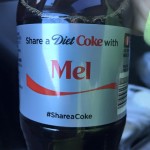
I tell you this not out of pride, but to make a point. I am a self-proclaimed marketing geek, and therefore, I should have known better. I should have known that Coca-Cola® was simply using personalization to their advantage. They were hoping for people like me to see their name, or a friend’s name, and feel excited to purchase a soda they wouldn’t have bought otherwise (and creating lots of social media buzz in the process). It makes me wonder how much extra money (and publicity) this tactic has made for them, by simply using something as simple as personalization. It may seem silly, but it is also eye-opening.
It would be unfair to compare digital and email marketing to plastic packaging, but the principle is the same. Personalization is a proven way to increase response. We’ve all read statistics showing the impact of personalization on engagement. For example, Experian recently ran an email study that showed that personalization garnered transaction rates as much as 6x higher. In this particular study, marketers experienced nearly 30% higher unique open rates and roughly 40% higher unique click-through rates. A quick Google search will find similar statistics across the board.
However, personalization seems to be a lot like exercising. We all know that we should do it, but we seldom do. Most studies show that 60-70% of businesses realize the importance of personalization, but they fail to use it regularly or don’t use it at all. Out of those that do use it, most of them would like to improve their strategy and execution. Why is it so infrequent? Because it can be difficult. Sure, there is some low hanging fruit, but true personalized content is hard, and it needs to be done right to maximize engagement while not crossing the line into creepiness.
If you are one of the few that has mastered personalization, awesome! Here’s a virtual high five and a pat on the back! But, if you are just starting out or looking for ways to bring personalization to the next level, here are some ideas. Start lacing up your sneaks.
Data-based Personalization
Standard Field Merges
Similar to my example of a personalized soda bottle, people respond better when they see their name. It goes back to basic, fundamental marketing from the good old direct marketing days. A letter that says “Dear, Melissa” has a much higher chance of being read than a letter addressed to “Dear, Valued Customer.” Fast forward to the digital marketing revolution, and we now have the ability to personalize almost anything. You certainly don’t want to go overboard, but you can (and should) use field merges within your emails to your advantage. Standard fields such as the contact’s name, company, and title are used most often, but feel free to get creative in order to capture attention.
Subject Lines and Calls to Action
More often than not, you’ll see personalized fields used in salutations and body copy, but there is no reason to stop there. Subject lines are an excellent place to use personalization. In fact, a recent study by MarketingSherpa showed a nearly 20% higher click-through rate when the subject line was personalized. Another creative use of personalization is within calls to action. Instead of using a typical call to action, try adding a personalized element to really capture attention. “Melissa, as a smarter marketer…” or “Create a smarter digital marketing team” are more powerful calls to action than “personalization tips and tricks.”
Deployment Timing
Thinking differently extends far beyond just the placement of field merges. Consider other ways that you can personalize your email sends. For example, why not personalize the time of your deployment? Why should contacts on the east coast receive communications at the same time as contacts on the west coast? If you’ve determined that 8:00a.m. is your best send time, use location as a filter to dynamically send at 8:00a.m. within each time zone.
Activity-based Personalization
Of course, if you really want to impact the engagement levels of your email communication, you need to go well beyond field merges in salutations and subject lines. Using your customer’s interests, behaviors, and actions to deliver meaningful content is at the heart of true one-to-one marketing.
Purchase Behavior
Let’s start with some low-hanging fruit: purchases or requests your customers have made in the recent past. Depending on your technology infrastructure, this data may be easy or complex to secure. However, the rewards are worth the effort. In this era of digital marketing, we have become accustomed to receiving confirmation emails after making certain purchases. Take it a step further by including recommendations based on those previous purchases. You can also consider creating a nurture track for customers that have purchased certain types of products, offering them content pertinent to that particular buyer and his/her needs, challenges, etc. Put yourself in the shoes of your customers and plan a communications series that speaks to them specifically.
Engagement
Similarly, you can use digital body language and engagement to decipher the interests of your prospects. If you find that a prospect is downloading or viewing content around a specific solution, challenge or product, consider pushing them down a nurture track specific to it. Offer them information that will be valuable as they continue down their buyer journey. This is where true marketing automation is at its best. Offering valuable content to prospects at each stage of the buying cycle. We may not have the luxury of knowing in which stage prospects are in their journey, but we can make assumptions based on their actions and buyer persona.
Dynamic Content
Another excellent use of personalization is the use of dynamic content within your email campaigns. Whether you are sending a highly targeted nurture email, a welcome email, or an event invite, there are always opportunities to customize content for the recipient. Think about how much more impactful it would be to utilize a headline or call to action that is dynamic based on a recipient’s persona, job role, or region. Finding ways to make your emails resonate with your contacts not only increases relevancy, but also increases engagement. Small changes can reap big rewards. If you really want to get advanced, investigate 3rd party content management platforms that can integrate with Oracle Eloqua to deliver personalized and customized modules of content based on a number of different contact data points and behavioral triggers.
Digital marketing has brought us a wealth of opportunity to truly engage our prospects and buyers. As consumers, whether B2B or B2C, we have come to expect this level of intimacy. We expect businesses to understand our needs and deliver messaging that is relevant to us specifically. In this “on demand” world, we won’t accept anything less, especially from companies that have already received our business.
As marketers, we should continually look for innovative ways to resonate with our audience. We need to ensure that our email communications don’t still live in the “batch and blast,” one-size-fits-all approach. We need to focus our efforts on creating content specific to each buyer, their needs, and their interests. When we do, we will not only see a rise in engagement, but also customer satisfaction and return on investment.
If you have Eloqua and you need support with email strategy or building emails, please contact us! We love helping companies transform their marketing automation.
Share This
About the Author: Melissa Santos